
Searching for reliable vehicle calibration in Twin Cities? If so, you are in the right place. Modern vehicles are much more advanced than their predecessors. These machines are fitted with numerous high-tech pieces of equipment to ensure a safe and seamless driving experience.
This requires using cameras, radars, and other instruments to create an image of the road ahead. However, if one of these pieces of equipment is misaligned or not working properly, it could compromise the performance of vehicle safety systems.
This is the area where Lucken Auto Glass can be more than helpful. We offer professional car calibration in Twin Cities. Our technicians are experienced enough to offer professional vehicle calibration.
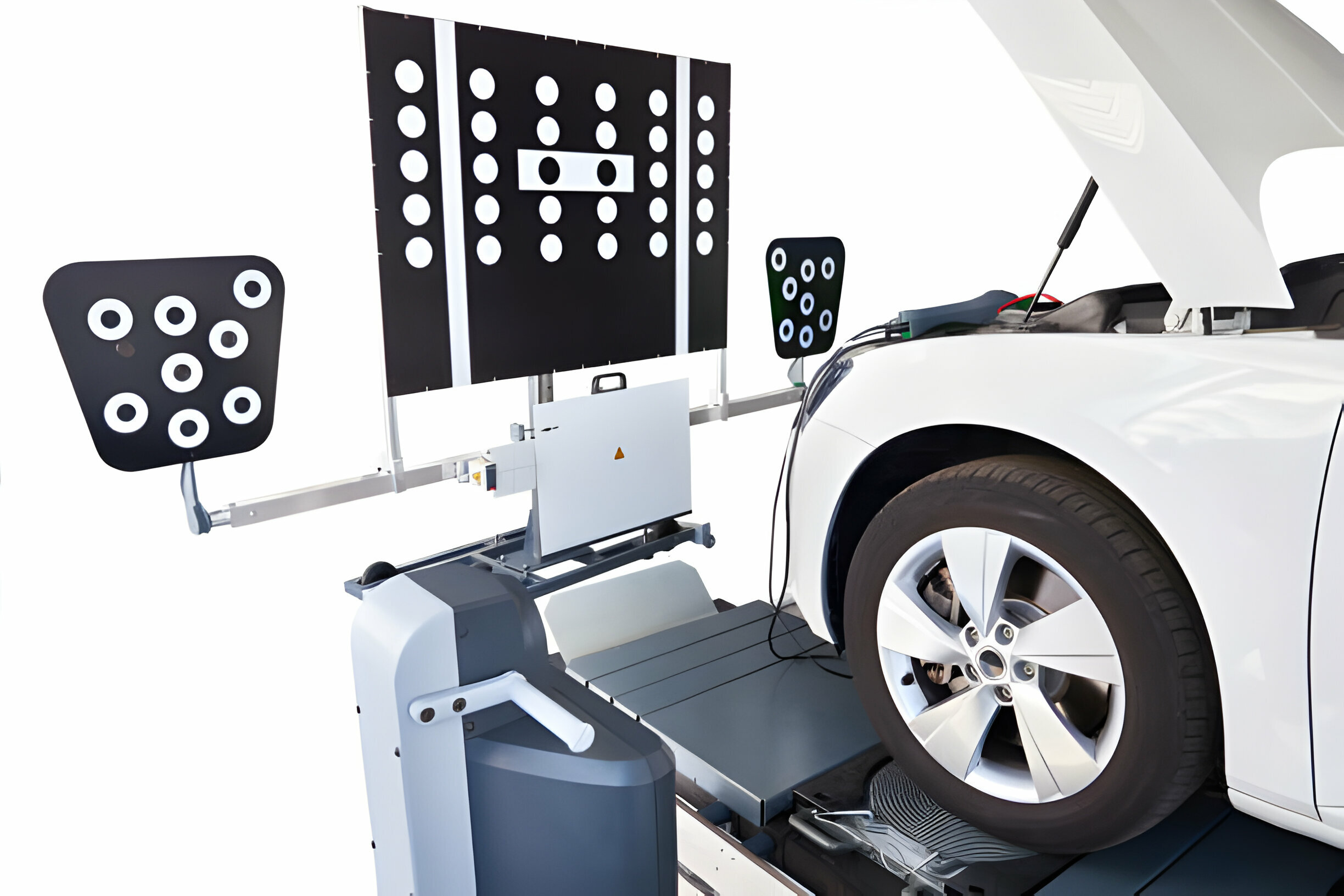
What is Vehicle Calibration?
Modern vehicles use cameras, radar, sensors, and other electronic systems to support a range of safety and driver-assistance features. Many of these features are part of Advanced Driver Assistance Systems (ADAS). These systems include pedestrian detection, lane assist, and emergency braking.
ADAS relies on accurately positioned and functioning cameras, radar, and sensors. When calibration is required, the affected components must be aligned according to the vehicle manufacturer’s procedures. If the mechanism is disturbed, it needs to be recalibrated. This requires you to look for a service provider that offers professional auto calibration in the Twin Cities.
Here’s a breakdown of the major vehicle systems that require calibration:
Cameras
Cameras act as the “Eyes” of a modern vehicle, offering visual data to a range of safety features. There are three major types of cameras: forward-facing, side-mounted, and rear. Collectively, they capture images of the road, lane markings, traffic signs, pedestrians, and obstacles.
To ensure the accuracy of the collected data, technicians perform camera calibration. During this process, the pitch, yaw, and roll angles of the camera are adjusted. The procedure is crucial, as even a minor misalignment can cause the system to misinterpret lane positioning or distances.
Radar
Radar (Radio Detection and Ranging) is a sensor that relies on radio waves. It identifies objects, measures their speed, and calculates their distance. The hardware is usually mounted behind the bumper, front grille, or side panels. Radar serves as an integral part of numerous ADAS features, such as:
- Adaptive Cruise Control
- Forward Collision Warning
- Automatic Emergency Braking
While performing radar calibration, technicians adjust the vertical and horizontal alignment using diagnostic equipment and specialized targets. This type of calibration is typically performed after a bumper repair, a front-end collision, or any work that requires removal of the radar unit.
Sensors (General)
In addition to cameras and radar, modern vehicles are equipped with a range of infrared, ultrasonic, and other sensors. For instance, ultrasonic sensors are commonly associated with parking assist systems. They detect nearby objects by emitting sound waves.
Whenever required, these sensors are meticulously calibrated. This ensures that the overlapping fields of view generated by them are unified and represent an accurate depiction of the vehicle’s surroundings.
Driver-Assistance Systems
These systems depend on continuous collaboration between software and hardware to enable semi-autonomous driving capabilities. The most prominent features of these safety systems include:
- Adaptive Cruise Control
- Lane-keeping assist
- Blind-spot monitoring
- Cross-traffic alert
- Automated parking
Different ADAS components may require calibration to ensure they are correctly aimed and functioning according to the vehicle manufacturer’s specifications. Depending on the vehicle and system, calibration may involve static procedures, dynamic procedures, or a combination of both.
Steering-Related Sensors and Systems
These sensors are fundamental to vehicle safety and dynamics. For instance, the Steering Angle Sensor (SAS) measures the position and rate of rotation. It provides required data to the safety systems, such as:
- Electronic Stability Control (ESC)
- Power Steering Assist
- Lane-keeping assist
- Adaptive headlights
Your vehicle may need SAS calibration when:
- The steering column is serviced.
- The steering wheel is removed.
- Wheel alignment is performed.
- Suspension components are replaced.
When performing SAS calibration, the steering sensor’s zero point is established. Besides, the sensor’s maximum turning angles are also calibrated. For this purpose, technicians use a diagnostic scanner.
The Critical Relationship: Windshield Calibration and ADAS Calibration
Windshield calibration focuses on aligning windshield-mounted or windshield-affected cameras and related driver-assistance systems, particularly the forward-facing camera. It may be required after a windshield replacement or other work that affects camera positioning, depending on the vehicle and the manufacturer’s specifications.
ADAS calibration is the broader process of calibrating advanced driver-assistance systems and their components, which can include forward-facing cameras, radar, ultrasonic sensors, and other cameras. Windshield calibration can therefore be one part of the broader ADAS calibration process.
When Does a Vehicle Need Calibration?
Modern vehicles differ in terms of their technology and manufacturer requirements. So, the decision whether your car needs calibration is mostly based on the following factors:
- The make and model of the vehicle
- The type of work performed
- The automaker’s prescribed procedures
Listed here are the most common scenarios that may require a calibration:
- Windshield Replacement (Based on Manufacturer’s specifications)
- Collision or Accident Damage
- Camera or Sensor Replacement
- Various ADAS-Related Repairs
- ADAS warning messages
- camera/sensor fault alerts
- Diagnostic results indicating misalignment
- Manufacturer-required calibration after a specific repair or replacement
Changes that Can Affect Sensor Positioning or Alignment
Changes that affect sensor positioning or vehicle geometry may lead to a calibration requirement, depending on the vehicle and the manufacturer’s procedures. The most common changes that might affect alignment or sensor positioning are:
- Collisions or accidents
- Suspension work
- Wheel alignments
- Changes in ride height
- Sensor or camera replacement
- Tire size changes
- Bumper removal and reinstallation
- Installation of aftermarket accessories
Types of Vehicle Calibration
Vehicle calibration involves numerous procedures, each associated with specific components, methods, and systems. Knowing these categories allows calibration shops to estimate the overall cost.
Discussed below are the different types of vehicle calibration:
Windshield Calibration
Windshield calibration generally involves checking and calibrating windshield-mounted or windshield-affected cameras, most commonly a forward-facing camera. It may be required after windshield replacement depending on the vehicle, the affected system, and the manufacturer’s specifications. The ADAS camera supports a variety of safety functions, such as:
- Lane-keeping assist
- Traffic sign recognition
- Automatic high beams
- Pedestrian detection
- Emergency braking
The windshield also serves as an integral part of a forward-facing camera’s optical system. Aspects such as windshield thickness, curvature, and clarity affect the camera’s accuracy.
Even if the replaced windshield is OEM auto glass, the camera viewing angle might shift slightly and require calibration. However, the decision to perform windshield calibration depends on the manufacturer’s requirements.
ADAS Calibration
ADAS calibration is a broad category that covers almost every driver assistance system within a vehicle. This includes radar units, lidar, ultrasonic sensors, forward-facing cameras, and side or rear cameras. ADAS calibration ensures that each of these components works accurately and in a synchronized way.
Camera Calibration
ADAS camera calibration focuses on the visual sensors or cameras installed at different locations on the vehicle. The most common types of cameras include:
- Forward-facing cameras
- Rearview cameras
- Side-mirror cameras
- Interior cameras (for driver monitoring)
Camera calibration helps establish the correct aiming, field of view, alignment, and positioning of the camera in accordance with the manufacturer’s specifications.
Radar and Sensor Calibration
This type of calibration involves the alignment and adjustment of non-visual detection systems such as ultrasonic sensors, radar, and lidar. These sensors rely on sound waves, radio waves, or laser pulses to measure distances, detect objects, and monitor speed.
Radar or sensor calibration is performed to tune beam alignment, sensitivity thresholds, detection zones, and related parameters. It is typically required after replacement or repair of the front or rear bumpers, side panels, or grille.
Static and Dynamic Calibration
Static and dynamic are two major vehicle calibration methods. Some driver assistance systems require static calibration, while others may need dynamic calibration. However, depending on the vehicle type and model, technicians may need to perform both calibration methods.
Static Calibration: As the name suggests, static calibration is performed in a controlled workshop environment with the vehicle parked. Technicians set up laser levels, target boards, and measurement tools to perform this procedure.
Dynamic Calibration: It is done while driving the vehicle on a straight, well-marked road. The vehicle continues to drive at a specified speed for a certain time. This allows the system to align itself as per the manufacturer’s specifications.
Vehicle Calibration Cost
The price of vehicle calibration is among the most common questions asked by car owners. However, it’s not possible to provide an exact quote, as prices may vary depending on a range of factors. Understanding such key aspects can help you avoid surprises.
Factors that Influence Price
Several key factors determine the car calibration cost in Twin Cities, and a few of them are listed below:
- Calibration method used
- Type of calibration required
- Additional services bundled together
- Number of sensors and systems involved
- Geographic location
- Equipment and tooling requirements
- Vehicle manufacturer specifications
Why Newer or More Complex Vehicles May Require Different Procedures
Newer vehicles are technologically advanced and often require more complex and expensive calibration procedures. Some luxury brands also demand proprietary software and diagnostic equipment that are mostly owned by dealerships.
Since vehicles are becoming more sensor-dependent and autonomous, the calibration process becomes more complex. This requires expensive equipment and specialized training, which ultimately adds to the car calibration cost.
Why an Exact Price Requires Vehicle-Specific Information
It’s not feasible to provide an exact car calibration cost without knowing the make, model, and equipment requirements of a vehicle. Even the manufacturer’s requirements differ among similar vehicles. Therefore, the only reliable way to get an estimated quote is by providing vehicle-specific information to a qualified repair shop.
Why Recalibrate?
Recalibration is crucial to the overall performance of a vehicle’s safety features. If done properly, it ensures that each component operates according to the manufacturer’s specifications.
In case of an accident or damage caused to a vehicle, the ADAS system may fail to perform efficiently. Without proper recalibration, a vehicle could pose a safety risk to passengers and others on the road.
Recalibration is a critical step that allows affected cameras, sensors, and driver-assistance systems to function properly. If your vehicle’s manufacturer specifies calibration after a repair, replacement, or other service, completing the required procedure can help ensure the affected systems operate according to their specifications.
What Makes Us Stand Out?
At Lucken Auto Glass, we understand that driving a car with a miscalibrated system poses a huge safety threat. This can be a frustrating experience for those who haven’t faced this issue before.
If you’re experiencing the same problem, Lucken Auto Glass can put your worries to rest. We ensure a stress-free and seamless auto glass calibration experience.
Below are the reasons why you should trust us:
Comprehensive Calibration Services
We offer windshield and ADAS calibration services for the systems we service, following the applicable vehicle-specific procedures. Our services include windshield calibration to align sensors after replacement and ADAS calibration to fine-tune your vehicle’s safety systems.
These essential calibrations maintain accuracy for features like lane-keeping, automatic braking, and adaptive cruise control, keeping you safe and confident on the road. Whether you need precise alignment for a new windshield or ADAS recalibration, trust our Twin Cities experts for reliable, quality service.
Certified Technicians
Our team consists of qualified technicians, capable of offering professional auto glass recalibration. They have years of experience using high-tech calibration equipment. Our team services a wide range of vehicle makes and models, with calibration procedures tailored to each vehicle’s specific requirements. We are known for offering professional vehicle calibration in Twin Cities.
Manufacturer-Specific Calibration Procedures
We perform calibration according to the manufacturer’s specifications. We follow applicable manufacturer specifications and calibration procedures for the vehicles we service. This allows us to meet the exact manufacturer-specified standards.
Diagnostic and Calibration Expertise
We accurately diagnose the problem and work on the misaligned components using proper calibration method/s. Our calibration experts can restore ADAS functionality of your vehicle to the manufacturer’s specifications.
Insurance Assistance
Forget about the hassle associated with filing an insurance claim, as we will do this on your behalf. We have worked with numerous insurance companies, which allows us to handle the insurance claim process confidently.
Windshield + ADAS Calibration
Windshield-related calibration and broader ADAS calibration can involve different cameras, sensors, and procedures depending on the vehicle. Our team can help identify the calibration service that best fits your windshield replacement, repair, or ADAS-related needs.
Lifetime Warranty
When it comes to vehicle calibration services, Lucken Auto Glass is a trusted name in the industry. We offer a lifetime warranty on all our services, including vehicle calibration. So, get your car calibrated and drive away with peace of mind.
Get Started Today!
Calibration requirements, procedures, and pricing may vary based on factors such as the vehicle’s type, make, and model. So, make sure to share this information with our team. It helps us identify the manufacturer-specific procedure and offer an accurate estimate.
For unparalleled vehicle calibration in Twin Cities, choose Lucken Auto Glass. Schedule your vehicle calibration appointment today and experience the difference.